

Suitable Saw Blade Type and Material Selection:
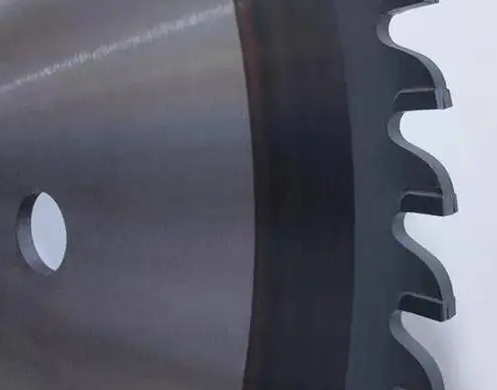
Carbide-tipped circular saw blades are the best choice. The base is made of 65Mn manganese steel, and the cutting tip is made of carbide. This combination avoids the saw blade clogging problem caused by rapid heat conduction during aluminum cutting. It is 3 times more durable than ordinary carbon steel blades, with a cutting life of up to 200 hours.
Unsuitable Types:
General-purpose cutting blades, ultra-thin resin blades, and silicon carbide grinding wheels are not suitable for cutting aluminum. General-purpose blades are prone to clogging and will blue within 3 minutes; ultra-thin resin blades have a high aluminum adhesion rate and a chipping rate of up to 15%; silicon carbide blades have rapid tooth tip wear and an overall cost 2.3 times higher.
Specifications:
Diameter Matching: A 105mm diameter is suitable for handheld angle grinders, with 40% higher efficiency than 80mm; a 125mm diameter is suitable for benchtop grinders, offering significant efficiency advantages in deep-cutting scenarios. Standard diameters also include 101mm (4-inch), 152mm (6-inch), and 180mm (7-inch).
Tooth Configuration
Following the “sparse tooth principle,” 24-40 tooth trapezoidal flat teeth with a tooth spacing of 15-25mm are recommended. When cutting 10mm aluminum profiles, a 30-tooth saw blade offers 28% better chip removal than a 40-tooth blade, and the clogging rate is less than 5% after 2 hours of continuous operation.
Thickness Selection
A thickness of 1.6-2.0mm balances rigidity and kerf economy. When cutting 20mm aluminum plates, a 1.8mm thick saw blade achieves a cut perpendicularity of 0.3mm, far exceeding industry standards.
Selection Points
Core Parameters
When selecting a saw blade, pay attention to the carbide matrix, the number of teeth suitable for the aluminum material, and the matching bore diameter. The bore diameter must match the spindle size of the equipment. For saw blades larger than 455mm, a 30mm bore diameter is recommended to improve stability.
Usage Tips
Control the speed at 8000-12000 rpm and cool it with compressed air every 30 seconds to extend the saw blade’s life by 50%. When three consecutive teeth become dull, professional equipment is required for repair; manual grinding will damage the alloy layer.
How Sharp are Carbide Saw Blades?
I. The Secret to the Sharpness of Carbide Saw Blades
The sharpness of carbide saw blades depends on their material and manufacturing process. Common cemented carbide (tungsten carbide) blades can reach a hardness of HRA90 or higher, easily cutting wood, plastic, and even thin metals. But sharpness doesn’t equal versatility—saw blade design must match material characteristics:
Cutting wood: 40-60 tooth saw blades are ideal
Cutting metal: Requires a dedicated low-speed saw blade
Cutting composite materials: Alternating tooth design is recommended
II. Sharpness in Real-World Applications
A new saw blade cutting aluminum alloy is like a hot knife through butter, but be aware of the following:
Speed control: 3000 rpm for wood, reduce to 1500 rpm for metal
Feed force: Excessive force will accelerate dulling
Temperature effects: Cool down after continuous cutting for more than 5 minutes
III. Secrets to Maintaining Sharpness
Regular maintenance can extend saw blade life by 3 times:
Clean resin residue every 8 hours of use
Apply rust-preventive oil after cutting metal
Hang the blade when storing to avoid tooth tip collision
Professional sharpening is more economical than replacement
FOTMA ALLOY specializes in the design, production, and manufacturing of carbide multi-blade saw blades, precision solid wood saw blades, woodworking tools, etc. Contact us for more info about our products!
Post time: Mar-08-2026