

Tungsten-copper alloys are classified as both pseudo-alloys (composed of tungsten and copper) and metal-matrix composites. Due to their excellent physicochemical properties, they are widely used in sectors such as the military, national defense, aerospace, aviation, marine engineering, electronics, and medical equipment. However, because of the significant differences in the physicochemical properties of tungsten and copper, conventional melting and casting methods cannot be used for production; instead, powder metallurgy techniques are typically employed.
Properties of Tungsten-Copper
As tungsten and copper are mutually insoluble metals, the resulting alloy combines the advantages of both constituents. Key characteristics include a low coefficient of thermal expansion, superior wear and corrosion resistance, excellent electrical and thermal conductivity, and good high-temperature performance.
Production Process for Tungsten-Copper
The process for manufacturing tungsten-copper alloys via powder metallurgy involves the following steps: powder preparation, batching and mixing, pressing/forming, sintering and copper infiltration, and cold working.
Representative Tungsten-Copper Products
(1) Tungsten-copper electrodes: Suitable for use as welding electrodes due to their excellent high-temperature performance, resistance to arc erosion, high density, and ease of machining.
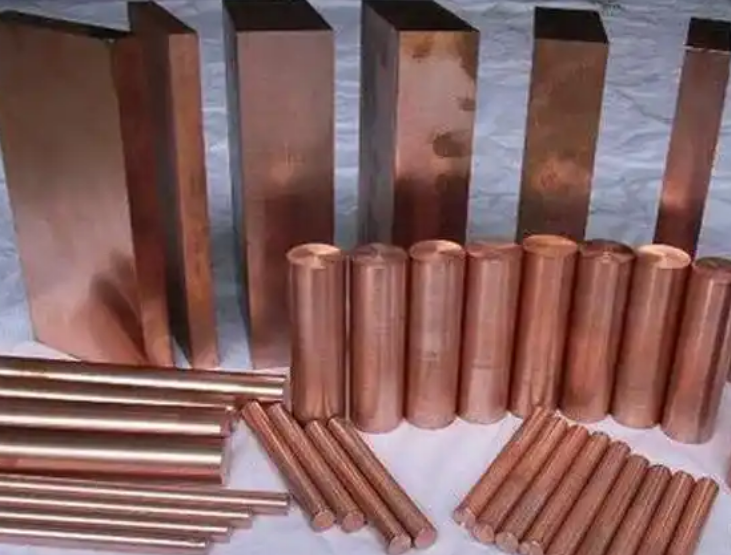
(2) Tungsten-copper alloy rods: Composite materials refined through isostatic pressing, high-temperature sintering, and copper infiltration. They leverage the superior metallic properties of high-purity tungsten powder alongside the plasticity and high conductivity of high-purity copper powder. Key features include good arc-breaking performance, resistance to softening at high temperatures, high strength, and high hardness.
(3) Tungsten-copper electronic packaging components: These combine the low thermal expansion characteristics of tungsten with the high thermal conductivity of copper. Notably, the performance of these components can be tailored by adjusting the ratio of the constituent materials.
(4) Tungsten-copper tubes: Widely used in applications involving cemented carbides and refractory metals. Because tungsten-copper alloys are easy to machine, these tubes are particularly valuable in scenarios requiring easy surface cutting and small internal diameters. (5) Tungsten-copper alloy wire: Precautions for use: 1) Do not apply colloidal graphite to the surface of the wire; 2) At temperatures above 1000°C, avoid contact with iron, nickel, or carbon; 3) Store in a dry environment with a relative humidity not exceeding 65% at room temperature, and avoid contact with acidic or alkaline substances.
(6) Military high-temperature resistant materials: Tungsten-copper alloys are used in aerospace applications for components such as missile and rocket engine nozzles, gas vanes, aerodynamic control surfaces, and nose cones. Key requirements include high-temperature resistance (3000K–5000K) and resistance to erosion by high-temperature gas flows. These materials primarily utilize the “transpiration cooling” effect—generated by the volatilization of copper (melting point: 1083°C) at high temperatures—to lower the surface temperature and ensure reliable performance under extreme thermal conditions.
Post time: Oct-12-2026