

In materials science, silicon nitride (Si₃N₄)-based ceramics shine like a bright star, attracting the attention of countless researchers with their superior performance and broad application prospects. As an advanced ceramic material, silicon nitride not only possesses excellent properties such as high strength, high hardness, high temperature resistance, and corrosion resistance, but also demonstrates great potential in multiple fields such as electronic devices, thermal management, and communication technology. However, traditional high-temperature sintering processes have always been a bottleneck restricting the industrial production of silicon nitride ceramics. Therefore, low-temperature pressureless sintering technology has emerged, opening up a completely new path for the preparation of silicon nitride-based ceramics.
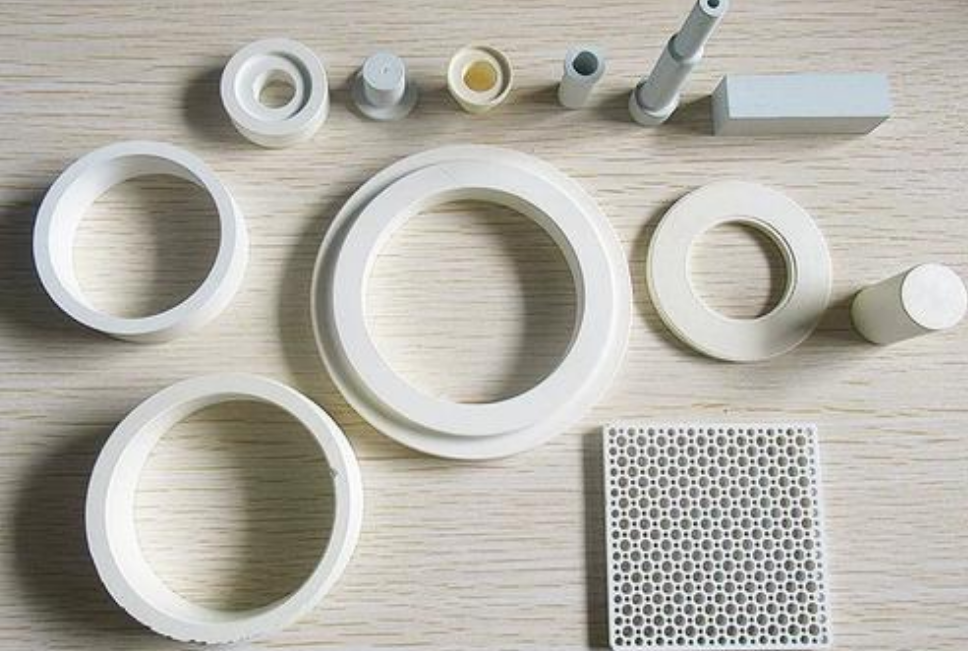
Traditional high-temperature sintering methods, such as hot pressing and reaction sintering, can improve the density and performance of materials to a certain extent, but they suffer from drawbacks such as complex equipment, high energy consumption, and high cost. In contrast, low-temperature pressureless sintering technology, with its unique advantages, has gradually become a research hotspot. This technology introduces suitable sintering aids, such as MgO and Y₂O₃, which react with the SiO₂ on the surface of silicon nitride powder to form a liquid phase, achieving material densification at low temperatures. This process not only lowers the sintering temperature but also significantly improves the overall performance of the material.
The preparation process of low-temperature pressureless sintering silicon nitride-based ceramics involves several key steps, including raw material selection, powder mixing, molding, and sintering. First, high-quality α-Si₃N₄ powder is the foundation for preparing high-performance silicon nitride ceramics. Researchers must carefully select raw materials to ensure their purity and particle size meet requirements. Subsequently, the α-Si₃N₄ powder is mixed with an appropriate amount of sintering aid, and the powder is uniformly dispersed through processes such as ball milling to form a mixed powder with good flowability.
In the molding stage, researchers typically use methods such as dry pressing or isostatic pressing to prepare green bodies with a specific shape and density from the mixed powder. During the molding process, the choice of molding pressure has a significant impact on the density of the green body and the performance of the final product. By optimizing the forming process parameters, it is possible to ensure that the green body has uniform density and good mechanical strength.
Sintering is the most critical step in the preparation of silicon nitride-based ceramics. During low-temperature pressureless sintering, sintering aids react with SiO₂ on the surface of silicon nitride powder to form a liquid phase, which exhibits good fluidity at the sintering temperature. Under the influence of the liquid phase, silicon nitride particles rearrange, reducing porosity and increasing the material’s density. Simultaneously, the dissolution-precipitation process allows some silicon nitride particles to dissolve in the liquid phase and subsequently re-precipitate elsewhere. This process helps eliminate internal defects in the material, further improving its performance.
Silicon nitride-based ceramics prepared using low-temperature pressureless sintering technology not only retain the excellent properties of silicon nitride itself but also achieve significant improvements in density, thermal conductivity, hardness, and fracture toughness. These high-performance silicon nitride ceramics have broad application prospects in aerospace, automotive manufacturing, power equipment, chemical equipment, and many other fields. For example, in the aerospace field, silicon nitride ceramics can be used to manufacture key components such as nozzles and combustion chambers for rocket engines; in the automotive manufacturing field, they can be used to manufacture wear-resistant parts such as engine cylinder liners and piston rings.
With advancements in technology and in-depth research, the preparation process of low-temperature pressureless sintering silicon nitride-based ceramics will be continuously optimized and improved. In the future, researchers will continue to explore new sintering aids and processes to further reduce sintering temperatures, improve material properties, and lower production costs. Simultaneously, as the applications of silicon nitride ceramics expand into more fields, their market demand will continue to grow. We have reason to believe that in the near future, low-temperature pressureless sintering silicon nitride-based ceramics will demonstrate their unique charm and value in more fields, contributing new strength to the development of materials science.
Post time: Feb-09-2026