

Applications of Molybdenum Wire
As an important molybdenum product, molybdenum wire is widely used in the production of high-temperature heating elements and high-temperature resistant structural components. Depending on the application, molybdenum wire can be divided into heating furnace molybdenum wire, spray-coated molybdenum wire, electric light source molybdenum wire (lamp core wire, support wire, edge rod, and lead wire for high-power, high-intensity special lamps), electronic device molybdenum wire, and wire cutting molybdenum wire, etc. During preparation and use, problems such as low wire yield, high wire breakage rate, and short lifespan exist. Pure molybdenum wire can no longer meet the requirements of modern industrial development, and various doped molybdenum alloy wires are increasingly valued, such as TZM alloy wire, Al-Si-K doped molybdenum alloy wire, Mo-Re alloy wire, rare earth doped molybdenum wire, Mo-Al2O3 alloy wire, and multi-element composite doped molybdenum wire, etc.
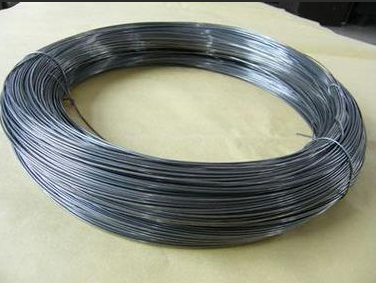
Pure Molybdenum Wire
Pure molybdenum wire is a special metal wire made primarily of ultra-high purity metallic molybdenum (Mo ≥ 99.95%) through powder metallurgy processes (including pressing, sintering, forging, and multi-pass drawing). This material exhibits excellent structural stability at high temperatures, possesses superior electrical and thermal conductivity, and outstanding corrosion resistance, making it an indispensable key functional material in modern industrial high-temperature, vacuum, and electronic technology fields.
Currently, the most important application of pure molybdenum wire is in spray coating. Sprayed molybdenum wire is a metal spray coating material that improves the wear and corrosion resistance of workpieces. It is used for fine spraying of worn automotive parts (such as piston rings) and mechanically worn surfaces. The production of sprayed molybdenum wire often employs a rolling-drawing process, which frequently results in defects such as burrs, peeling, flaking, scratches, and folds on the surface. Frequent wire breakage during the drawing process leads to low yield and increased production costs.
TZM Alloy Wire
TZM alloy is one of the most widely used molybdenum alloys currently available. TZM alloys, in which small amounts of elements such as Zr and Ti are added to molybdenum (the optimal content of Ti and Zr is 0.5% and 0.1%-0.4%, respectively), improve tensile strength and recrystallization temperature through solid solution strengthening and dispersion strengthening, thus enhancing their overall mechanical properties. TZM alloy wires are produced, but they suffer from severe wire breakage, resulting in an extremely low yield, and can only be drawn into thick wires, making mass production currently difficult.
Al-Si-K Doped Molybdenum Alloy Wire
Al-Si-K doped molybdenum alloy, also known as high-temperature molybdenum “HTM,” utilizes the “K-bubble” principle for strengthening. Its recrystallization temperature is approximately 400℃ higher than pure molybdenum, and it produces a large-grain structure with a high aspect ratio, improving the high-temperature comprehensive mechanical properties of the molybdenum wire. Al-Si-K doped molybdenum alloy wire is used in the electrical industry, generally for high-temperature parts requiring a certain strength, such as in incandescent lamps where it is widely used for coils, filament support wires, and foil seals.
Mo-Re Alloy Wire
The addition of refractive index (Re) to Mo-Re alloy wire significantly lowers the ductile-brittle transition temperature of molybdenum wire (down to a minimum of -254℃), improving recrystallization brittleness and enhancing the room-temperature processing performance of molybdenum—a phenomenon known as the “rhenium effect.” Mo-Re alloys can achieve a room-temperature tensile strength of up to 1000 MPa and an elongation of 20% or more. Mo-Re alloys can be used to manufacture wires, foils, plates, tubes, and rods, especially for ultra-fine wires used in elastic components. Due to the rarity and high cost of rhenium, future research on Mo-Re alloys will focus on obtaining alloys with superior properties through trace amounts of rhenium doping.
Rare Earth Doped Molybdenum Wire
Adding rare earth oxides to the molybdenum matrix can improve the overall high-temperature mechanical properties of molybdenum, lower the ductile-brittle transition temperature, and significantly improve its resistance to high-temperature sag, room-temperature brittleness, and plasticity. Simultaneously, it enhances both strength and plasticity. Rare earth doped molybdenum wire is widely used in high-temperature furnace heating elements, light source filaments, and EDM electrodes. Commonly used additives in rare earth oxides include Nd₂O₃, Gd₂O₃, Y₂O₃, Sm₂O₃, and La₂O₃, with typical addition amounts around 1.0%, and particle sizes reaching submicron levels.
Mo-Al₂O₃ Alloy Wire
Al₂O₃, a commonly used dopant in ceramic oxides, possesses advantages such as good performance and low cost. The addition of Al₂O₃ enhances the wear resistance of the molybdenum matrix, making Mo-Al₂O₃ alloy wire a promising type of molybdenum wire for the wire EDM industry.
Contact us to get latestest prices of all kinds of Mo wires!
Post time: Mar-01-2026