

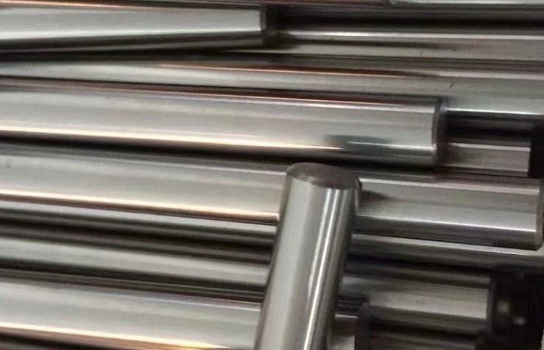
High-temperature molybdenum, also known as molybdenum-lanthanum alloy (MoLa), is formed by doping molybdenum with a small amount of lanthanum oxide (La2O3) particles (0.4%-0.7%) to create a so-called laminated fibrous structure. This unique microstructure remains stable even at temperatures up to 2000℃. Therefore, molybdenum-lanthanum oxide exhibits creep resistance even under extreme high-temperature conditions. We mainly process this alloy into high-temperature furnace components, such as heating wires and heating belts, sintering and annealing boats, or evaporator coils. High-temperature molybdenum is less prone to brittleness under long-term high-temperature conditions and has better processing performance. (Follow me for more special materials!) Common specifications include thin plates, round bars, square steel, grindable to a tolerance of ±0.05mm, with a bright, burr-free surface.
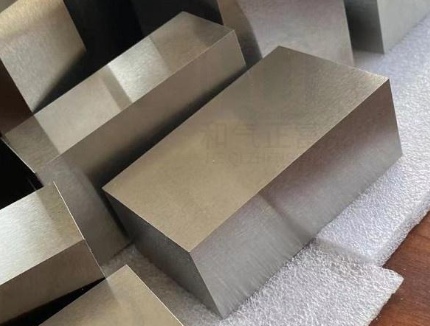
Pure molybdenum, with its excellent mechanical and chemical properties, has become a metallic material capable of meeting stringent requirements. Its advantages include a high melting point, low coefficient of thermal expansion, and good thermal conductivity, making it widely used in many different industrial fields. Mo1 National Standard: GB/T 3876-2007 Molybdenum and Molybdenum Alloy Plates
Molybdenum Content: Mo≥99.95%
Density: ≥10.2g/cm3
Pure molybdenum (Mo1), with a molybdenum content greater than 99.95%. Primarily used in high-temperature environments where purity requirements are stringent. Compared to high-temperature molybdenum, it has a lower recrystallization temperature and poorer processability.
Pure molybdenum (Mo1) withstands temperatures around 1700℃, while molybdenum-lanthanum alloy (MoLa) remains stable even at temperatures above 2000℃.
Properties of Molybdenum:
1. Molybdenum has a melting point of 2623°C, good creep resistance, and can withstand high temperatures.
2. Low coefficient of thermal expansion and high thermal conductivity.
Molybdenum Plate Production Process:
Molybdenum billet (raw material) – Inspection – Hot rolling – Leveling and annealing – Alkali washing – Inspection – Warm rolling – Vacuum annealing – Inspection – Cold rolling – Leveling – Shearing and vacuum annealing – Inspection – Packaging
Common Uses of Molybdenum Plates:
Widely used in the production of reflectors and covers for sapphire crystal growth furnaces, reflectors, heating elements, and connectors for vacuum furnaces, sputtering targets for plasma plating, high-temperature molybdenum-containing boat parts, heat-resistant equipment, sputtering equipment, and high-temperature furnaces, etc.
Post time: Mar-07-2026